Chapter 1: The stone chariot
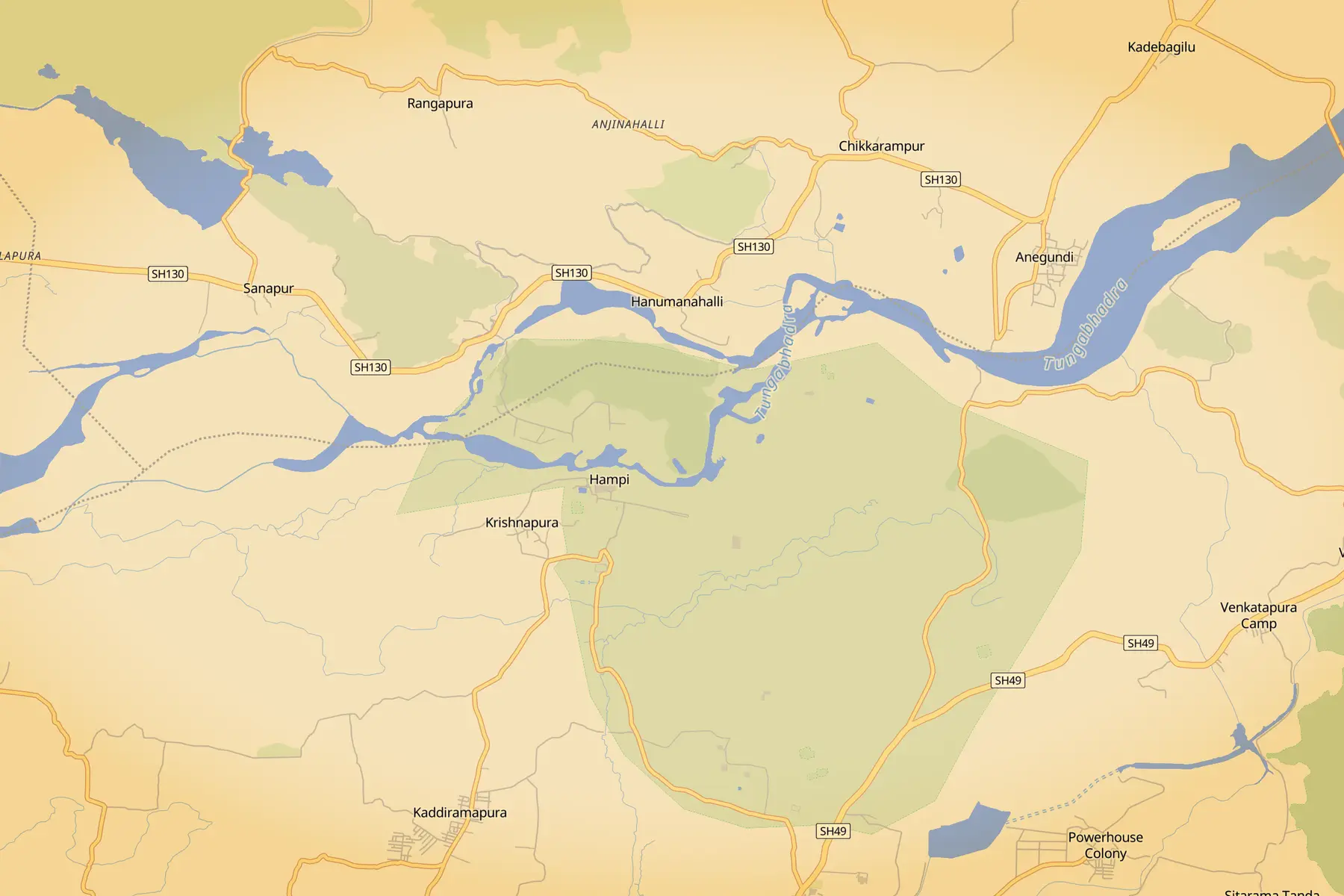 Vitthala Temple
You have probably seen the stone chariot of Hampi before you ever get there. It is on postcards, on travel posters, and on the back of India's newer fifty-rupee note. So when you walk into the courtyard of the Vitthala Temple and see it in front of you, the first feeling can be a strange one: recognition, without understanding.
That is where a local guide comes in.
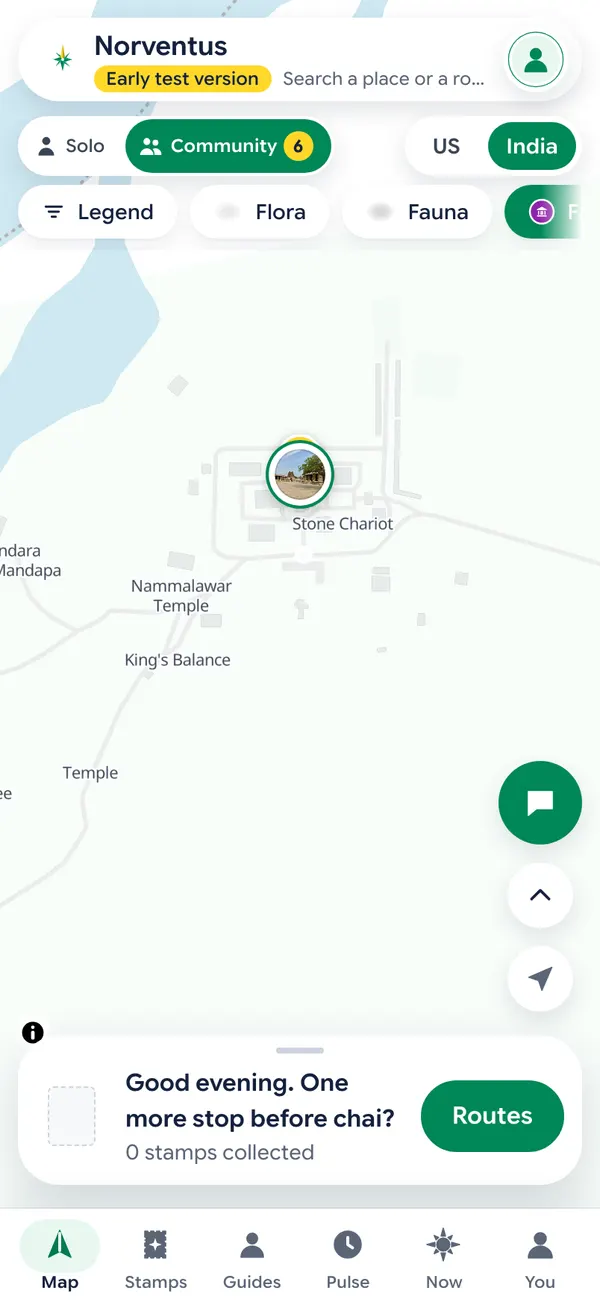
The person by the chariot
In Hampi, the people who know the ruins best often grew up around them. Their families farmed the fields between the boulders, ran the tea stalls, rowed the round coracles across the Tungabhadra. They heard the stories as children, long before anyone wrote them on a sign.
Ask one of them about the chariot, and the photo stop becomes something else.
Recognition, without understanding. That is where a local guide comes in.
What the chariot is
It is a shrine. The chariot was built in the 1500s, in the years when Vijayanagara was one of the great cities of the world, and it was made to hold an image of Garuda, the great bird who carries Vishnu, facing the main temple of Vitthala, a form of Vishnu. It looks like a single carved rock. Look closer and you can see it was built from many blocks of granite, fitted so well that the joints hide in the carving.
A good guide will show you the stone wheels and tell you what people say about them: that they once turned. Whether they ever did is one of those questions Hampi likes to keep. The guide will also point out the two stone elephants at the front, which seem to pull the chariot toward the temple, and then show you what is behind them: the hind legs and tails of two stone horses. Many believe the horses came first and the elephants were added later.
None of this is secret. All of it is easy to miss when you are standing in the sun, holding a phone up for a photo.
- 1336Vijayanagara is founded on the Tungabhadra (the traditional date)
- 1509Krishnadevaraya's reign begins: the city near its height
- 1565The Battle of Talikota; the city is sacked and left
- 1986UNESCO lists the Group of Monuments at Hampi
- 2026Today: 32 Norventus stamps, collected on foot
The city of Bidjanagar is such that the pupil of the eye has never seen a place like it, and the ear of intelligence has never been informed that there existed anything to equal it in the world.
Chapter 2: The pillars that sing
Vitthala TempleThen the guide walks you into the temple's great hall and stops by the slender stone pillars. People call them the musical pillars: carved so that, when struck, some of them ring with a note. For years visitors tapped them to hear it. Today visitors are asked not to tap them, so the pillars can last.
What I saw from thence seemed to me as large as Rome, and very beautiful to the sight.
What a guide adds is the why. Why a city would build a hall like this, what music was played in it, what the carvings on each pillar show. You leave with the sound in your head, even though you never heard it.
You leave with the sound in your head, even though you never heard it.
Chapter 3: The people who know the story
HampiVirupaksha TempleNorventus is built so the person who knows the story can reach the people standing in front of it. The Guides tab has three ways to take part:
- Visitors use the guide, confirm what other people have posted, and keep their own map.
- Explorers share updates and photos from the places they go, and earn trust as other people confirm them.
- Guides write the guidance for places they know well.
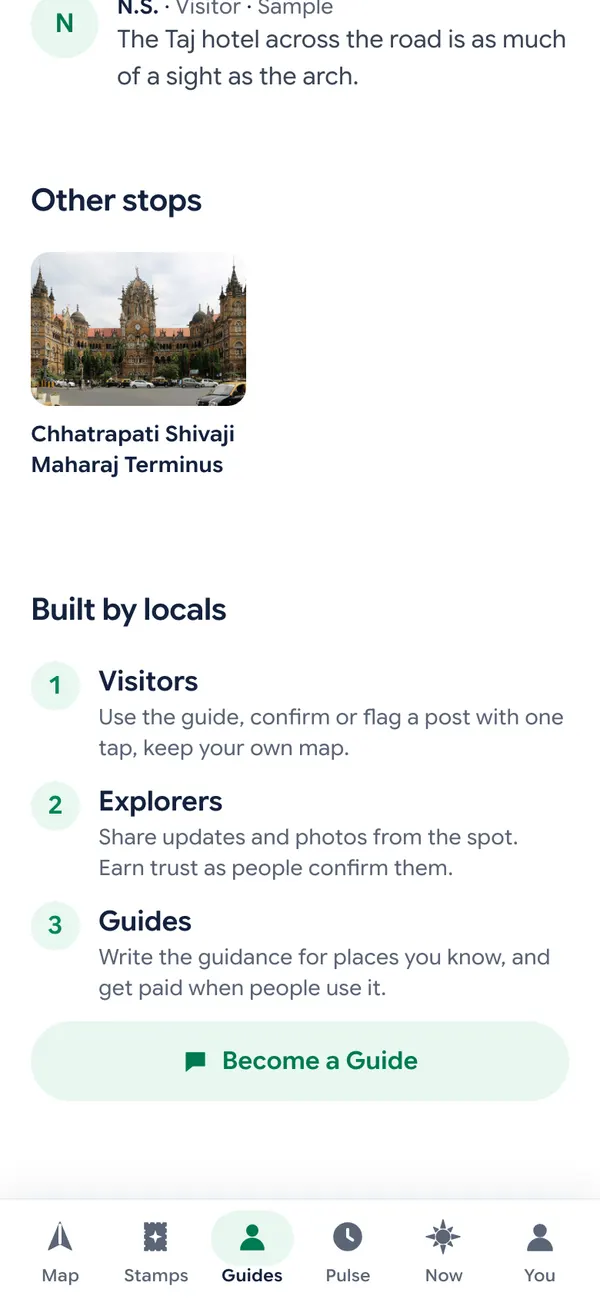
For a place like the Vitthala Temple, a guide's notes show on the Guides tab under "Top guides here", next to what visitors say. If nobody covers a place yet, the app shows Become a Guide.
A few house rules keep it honest. Guides say what is known and where it came from, so a legend reads as a legend and a date reads as a date. Phone numbers and emails are blocked in posts and profiles, so people reach each other inside the app. Photos are the guide's own, or openly licensed and credited.
Chapter 4: Collect the courtyard
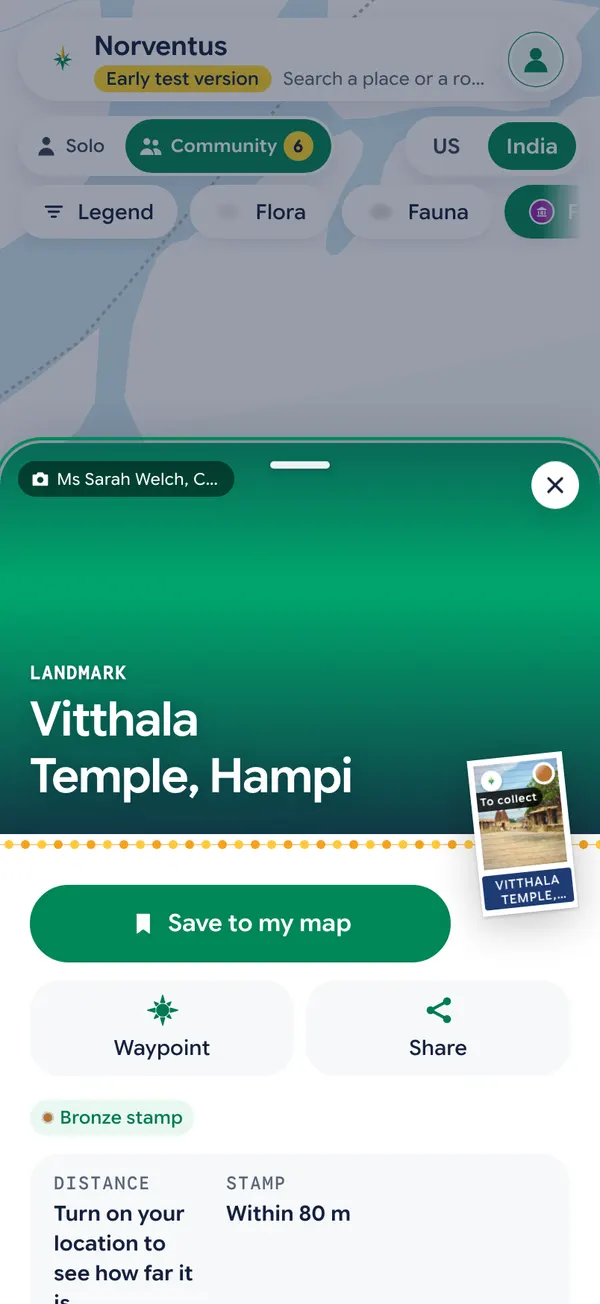
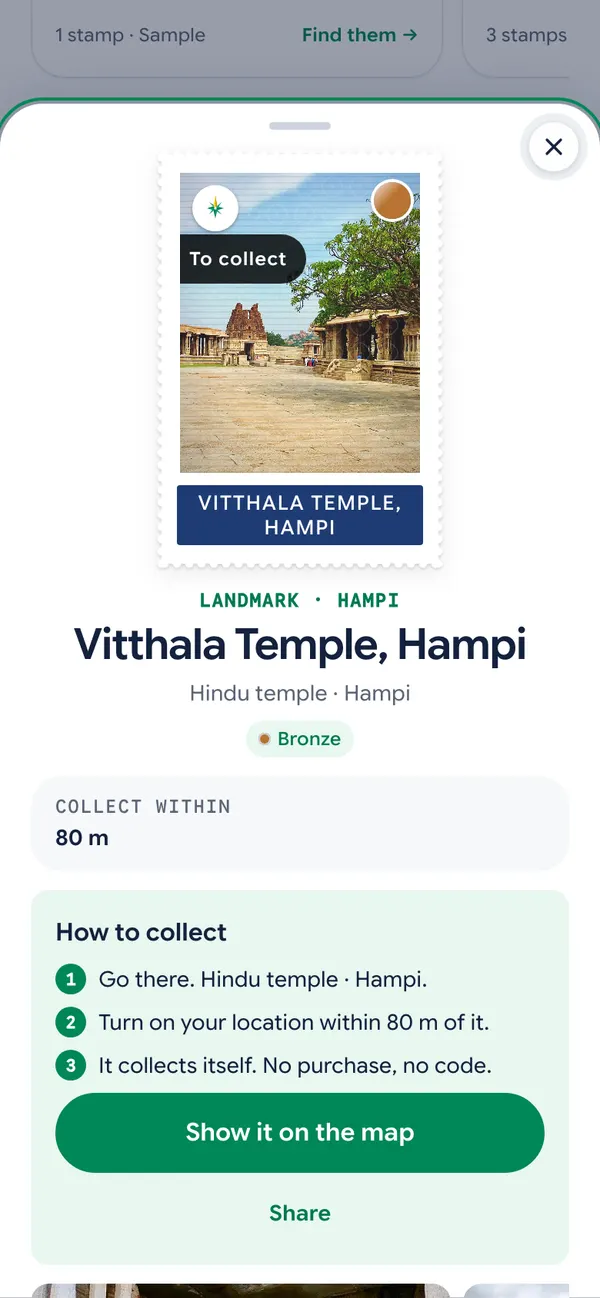
Hampi has 32 stamps in the Norventus catalog (as of 16 November 2026), and the Vitthala Temple is among them. Like every stamp, it can only be collected in person, at the place, with location on. Your position stays on your phone.
Six stamps hide on the map of Hampi. Your turn.
Collect it after you have heard the story. When you open your passport later and see the date, you will remember the chariot, and the person who showed you the horses hiding behind the elephants.
Before you go
- The Vitthala Temple has its own ticket and hours, set by the Archaeological Survey of India. Check them before you plan your day.
- Hampi is hot and wide. The sites are spread over many kilometers. Start early, carry water, and plan rest under shade.
- Ask the local guide about their sources. The best ones are glad you asked.
Know a place this well?
If you grew up with the stories of a temple, a market, a fort or a stretch of coast, the people who visit it need you. In Norventus, go to Guides, find your place, and tap Become a Guide.