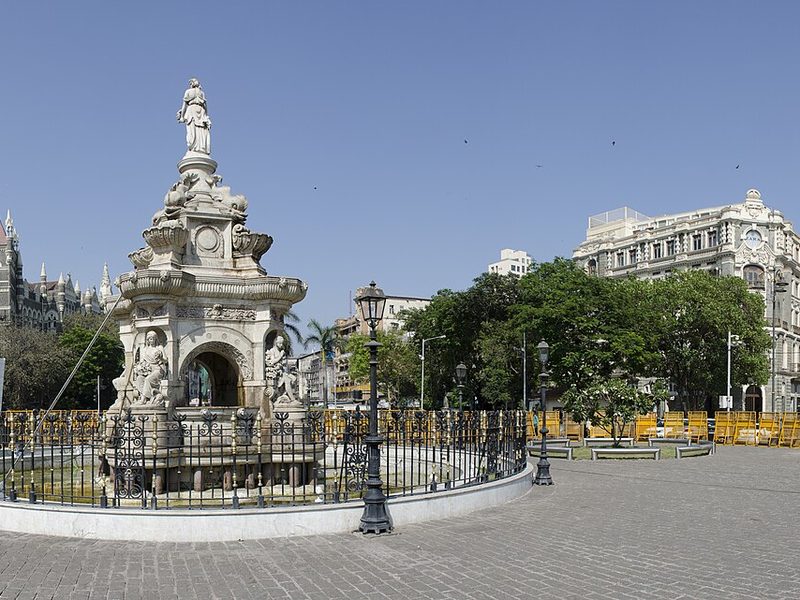
Before the shutters go up: a winter morning in Old Delhi
From the Red Fort along Chandni Chowk to the Jama Masjid, with breakfast in the lanes and someone who grew up there to show you the way.

Chapter 1: Come early
Ask someone who grew up inside Old Delhi when to come, and the answer is nearly always the same: early, in winter, before the shutters go up. Mist sits low over the Red Fort, the chai is already on, and for an hour the lanes belong to the people who know them.
Find a friend, or a friend's uncle, who calls these streets home, and let them lead.
The old city's proper name is Shahjahanabad. Shah Jahan moved the Mughal capital here from Agra, and the walled city, with its 14 gates, was completed in 1648. The Red Fort was its focal point, and the walk begins there.
Chapter 2: The street of moonlight
Start outside the Lahori Gate, the fort's main entrance, which has its own stamp. Turn your back to it, and the long, straight street ahead is Chandni Chowk.
Your friend will tell you what used to be here. Laid out in 1650 and designed by Shah Jahan's daughter, Jahanara Begum, the street had a shallow channel of Yamuna water down its middle and a pool in the square that caught the moonlight. That is the name: moonlight square. A clock tower replaced the pool in the 1870s, and the canal is long gone, but in the fog it is easy to picture.
By day the whole street is closed to motor traffic, so the morning is mostly footsteps and greetings.
The city's faiths stand side by side along the way. Gurdwara Sis Ganj Sahib marks where the ninth Sikh Guru, Tegh Bahadur, was executed in 1675, and near it is the small Sunehri Masjid, from 1721. At the far end stands the Fatehpuri Masjid, built in 1650 by Fatehpuri Begum, one of Shah Jahan's queens.
Chapter 3: Breakfast in the lanes
Then your friend gets hungry. Off the main street is Paranthe Wali Gali, the lane of flatbread, which sold silverware before the paratha cooks moved in from the 1870s.
Ask for parathas stuffed with peas or cauliflower, or sweet ones with rabri or khoya, served with tamarind and mint chutneys, pickle, potato curry and a mash of sweet pumpkin. The cooking traditionally leaves out onion and garlic. Then a sweet lassi in a clay kulhar, cold breath and all.
Come early, in winter, before the shutters go up.
What a local friend brings
A sense of order: which lane to take, when to step aside for a handcart, what to eat next. Perhaps jalebi fried in ghee and eaten hot, or bedmi puri with aloo sabzi.
And the stories no sign carries: whose family built which haveli, why one kucha is named for gardeners and another for oarsmen. Ask where each story came from. The good storytellers are glad you asked.
Chapter 4: The courtyard at the top of the city
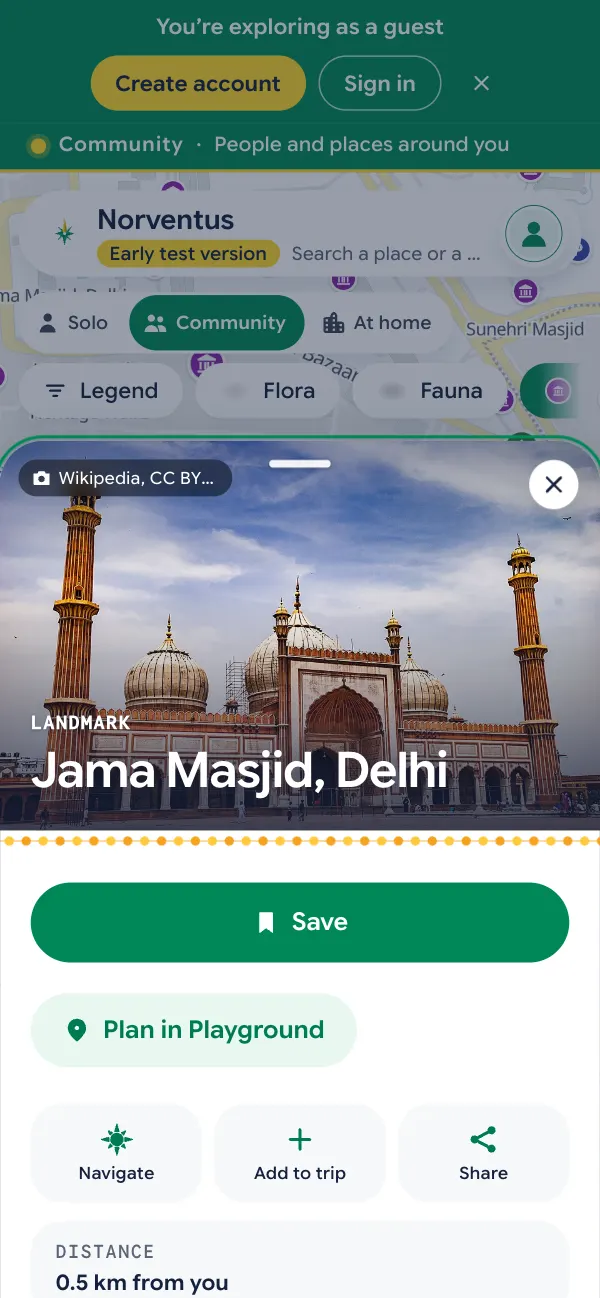
From Chandni Chowk, Dariba Kalan, a 17th-century market street for silver and gold, leads you to the Jama Masjid.
Then the steps rise, and so does the city. Shah Jahan built the Jama Masjid at the highest point of Shahjahanabad, and it was inaugurated on 23 July 1656. Its red sandstone courtyard, more than 325 feet on each side, can hold 25,000 worshippers around a marble ablution pool.
On a winter morning the courtyard can be very still: cold stone underfoot, a few people at prayer, the domes coming out of the mist. This is a working mosque, where the city gathers for Friday prayers and Eid. Come as a guest. Cover your shoulders and legs, leave your shoes at the steps, and keep your camera away from people at prayer. Visitors are not let in at prayer times.
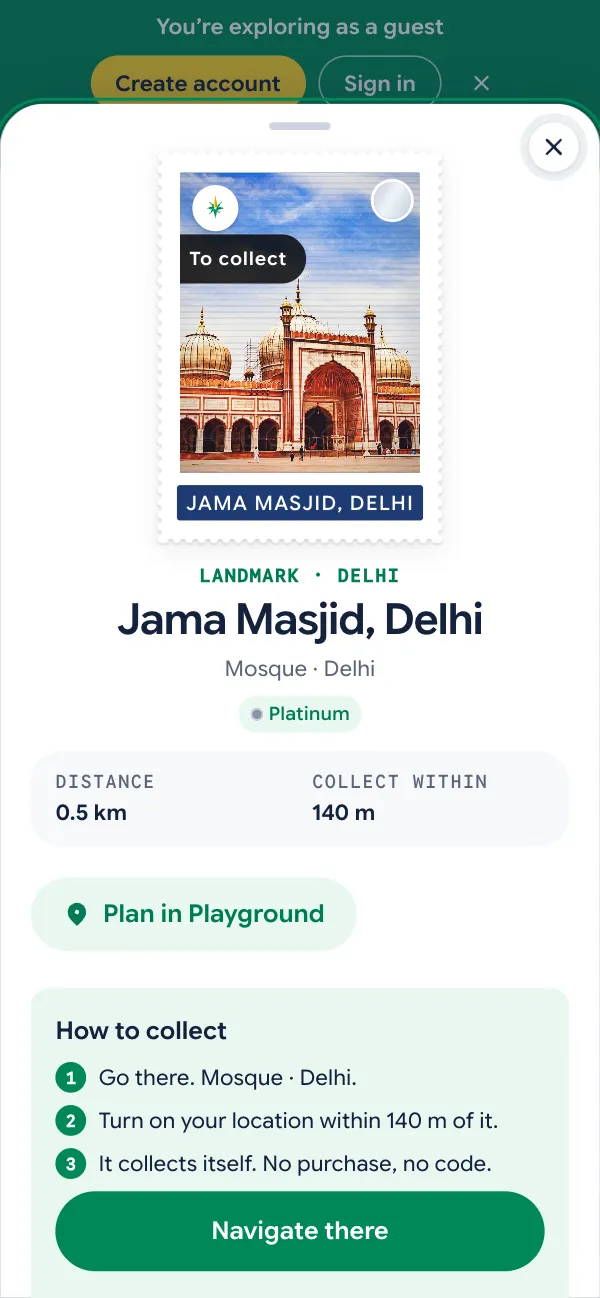
Delhi has 98 stamps in the Norventus catalog (as of 18 November 2026). This walk passes the platinum stamps for the Red Fort and the Jama Masjid, and smaller ones along Chandni Chowk. Each is collected only in person, at the place, with location on. Your position stays on your phone.
The night before, plan it in Playground: put the Lahore Gate and the Jama Masjid on one map with everyone coming, so whoever runs late knows where breakfast is.
One street, a plate of parathas, and a courtyard at the top.
Before you go
- The Jama Masjid is a place of worship first. Visiting hours follow prayer times and can change. Check the Delhi Tourism page for the Jama Masjid and ask at the gate.
- The Red Fort keeps its own hours and tickets, set by the Archaeological Survey of India, and it usually closes on Mondays.
- Winter mornings can bring dense fog and haze. Look at the India Meteorological Department forecast and the air quality index, and dress in layers.
- At the gurdwara, cover your head (scarves are provided) and leave your shoes with the volunteers.
Come early, follow someone who knows the lanes, and collect the morning.